

I’ll admit that, like most people who’ve seen it, I’m a sucker for the famous training montage in Rocky. Who can be unmoved by the sight of a simple working-class guy from Philly gearing up to take on the heavyweight champ of the world? The kids running with him through the streets, the pounding of a side of beef with his bare hands, the one-armed push-ups, and the iconic sprint up the steps of the Philadelphia Museum of Art — hands aloft, music swelling. It gets me every time.
But for all its drama, the montage can quietly misrepresent how growth actually works. Its compression makes it feel like Rocky got from hopeless to unstoppable in a matter of days — as if he got inspired, tried two or three times, fell short, and then arrived fully formed, ready to go toe to toe with the great Apollo Creed. A more realistic film — a duller one, admittedly — would have shown us the mornings he didn’t make it out of bed, the despair and self-doubt, the injuries that set him back, and the pervasive fear that he might not “be enough” to do this at all.
There’s an old maxim: slow and steady wins the race. It holds as true for spiritual development as for sports, or any great undertaking — though the truer word isn’t slow (plenty of growth is fast once it catches) but gradual: it comes in stages, each one real. Some hold the mistaken belief that Judaism is “all or nothing” — that if you’re not achieving at the highest levels, in learning, in prayer, in the performance of mitzvot, then you’ve essentially failed. This is false: not only because that’s not how the world works, but because the tradition itself insists on the opposite.
The Talmud (Avodah Zarah 3a) says that God does not deal with His creatures b’trunya — tyrannically. He makes no unreasonable demands and doesn’t expect perfection. The Torah does hold very high standards (I don’t think we’d respect it much otherwise) — but the way it lets you get there, gradually, in stages, is eminently generous.
Think of it a bit like Mick, Rocky’s curmudgeonly trainer: he pushes Rocky, he expects a lot, but he also loves him and believes in what he could become. No pushing, no championship fighter. But the pushing is never contempt for where Rocky is now; it’s faith in where he’s headed. And when the win was beyond him — as it was in that first film — the two of them celebrated what he could do: in this case, simply going the distance, staying on his feet all fifteen rounds.
The Jerusalem Talmud (Berakhot 1:1) has a beautiful image for this:
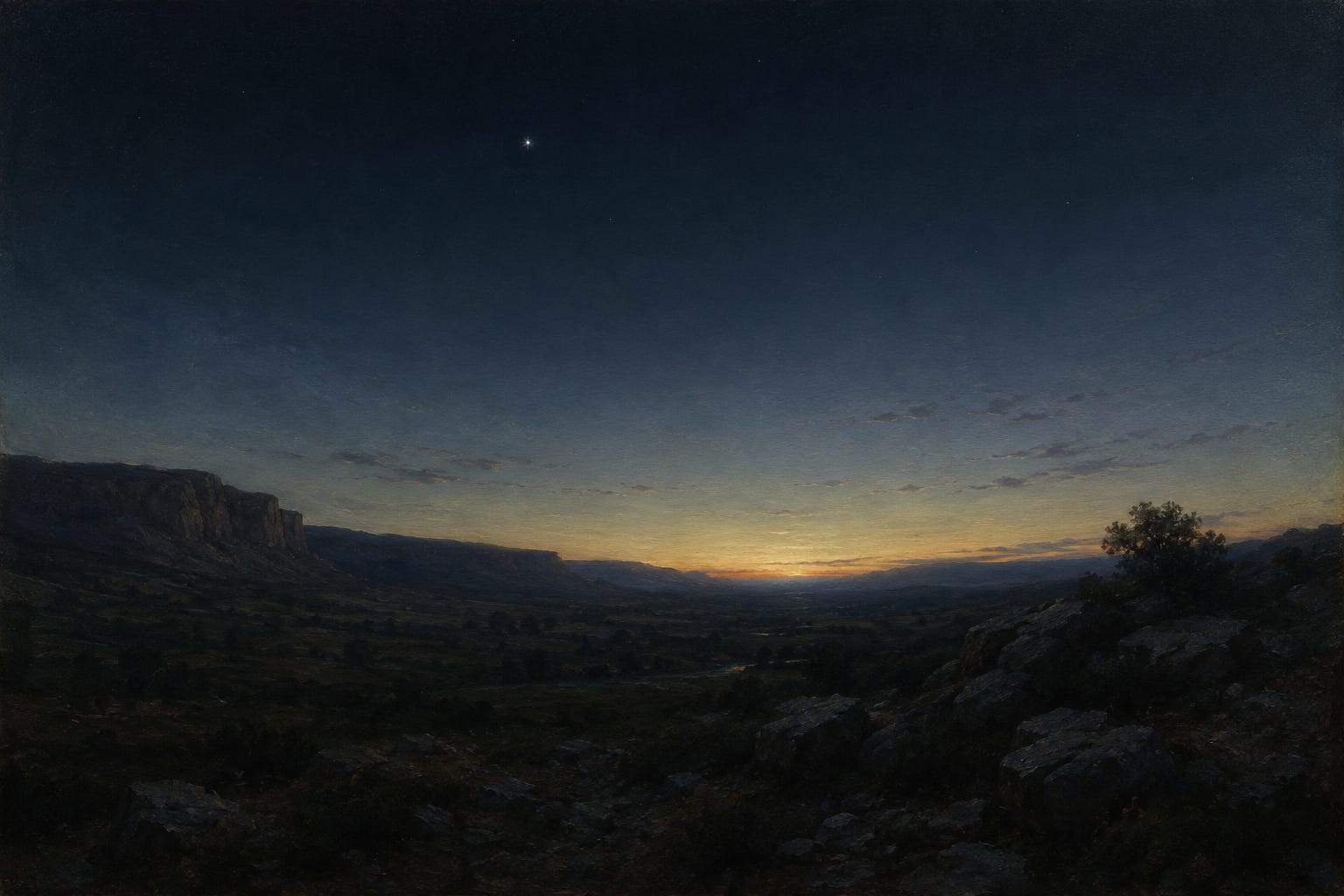
Rabbi Ḥiyya and Rabbi Shimon ben Ḥalafta were walking in the valley of Arbel at the break of dawn, and they saw the morning star breaking forth with its light. Rabbi Ḥiyya said to Rabbi Shimon ben Ḥalafta: “So is the redemption of Israel. At first, little by little; as it proceeds, it grows and grows.”
This is the key. Dawn is not a failed noon. The faint 5 a.m. light isn’t an imperfect day; it’s day, in its first measure — real light, doing exactly what light at that hour is meant to do. The prophet Micah said, “though I sit in darkness, the Lord is a light to me.” It’s not that the light will arrive eventually — it’s already here, while it’s still dark. So the vision of where you could go stays whole, and the standard stays high; but it’s something you grow into, little by little.
Another famous boxer, Mike Tyson, once said, “Everybody has a plan until they get punched in the mouth.” Maybe boxing still captivates us because the ring is a lot like life. You come out of your corner swinging and try to manage whatever’s arrayed against you. Sometimes you land a clean punch, and sometimes you get floored. But it’s not only the fighter with the title who wins — it’s anyone willing to get in the ring and go the distance. Neither Tyson nor Rocky became great overnight; they stand for something simpler — the willingness to get up, again and again. That’s how you win — little by little.
ALSO FROM THE LOOKING GLASS
The Well
Weekly chaburot in Kabbalah, Jewish philosophy, Mussar and Parsha. Five to ten people, one hour.
Apply for a seat →
Ohr Chozer
A private, judgment-free space for people working through doubt, or just beginning to ask.
Ask to join →