

In the last week I was privileged to witness the power of Jewish giving in action, in three different ways. There are, of course, many ways to give — emotionally, financially, spiritually. These are all vital, and bless all who do them. But it seems to me there is a special merit reserved for those who roll up their sleeves, show up when things are going wrong, and act. All the more so when they are volunteers, giving nothing but their time, their hands, and their presence.
Last Friday, just after six in the morning, one of my kids woke me with a series of odd symptoms she’d never had before. I considered waiting the couple of hours until the local urgent care opened — but it was strange enough that I wanted faster clarity. So I called Hatzalah, the volunteer Jewish emergency medical service, staffed by neighbors. Within minutes they were at my door. They assessed the situation, got a doctor on the phone to confer, and in the end recommended we do nothing at all. We were grateful and relieved. But what stayed with me was something else: the beauty of people getting out of bed before dawn for us, and the peace of mind they left behind — for a problem that turned out to be nothing, and which they treated as though it were everything.
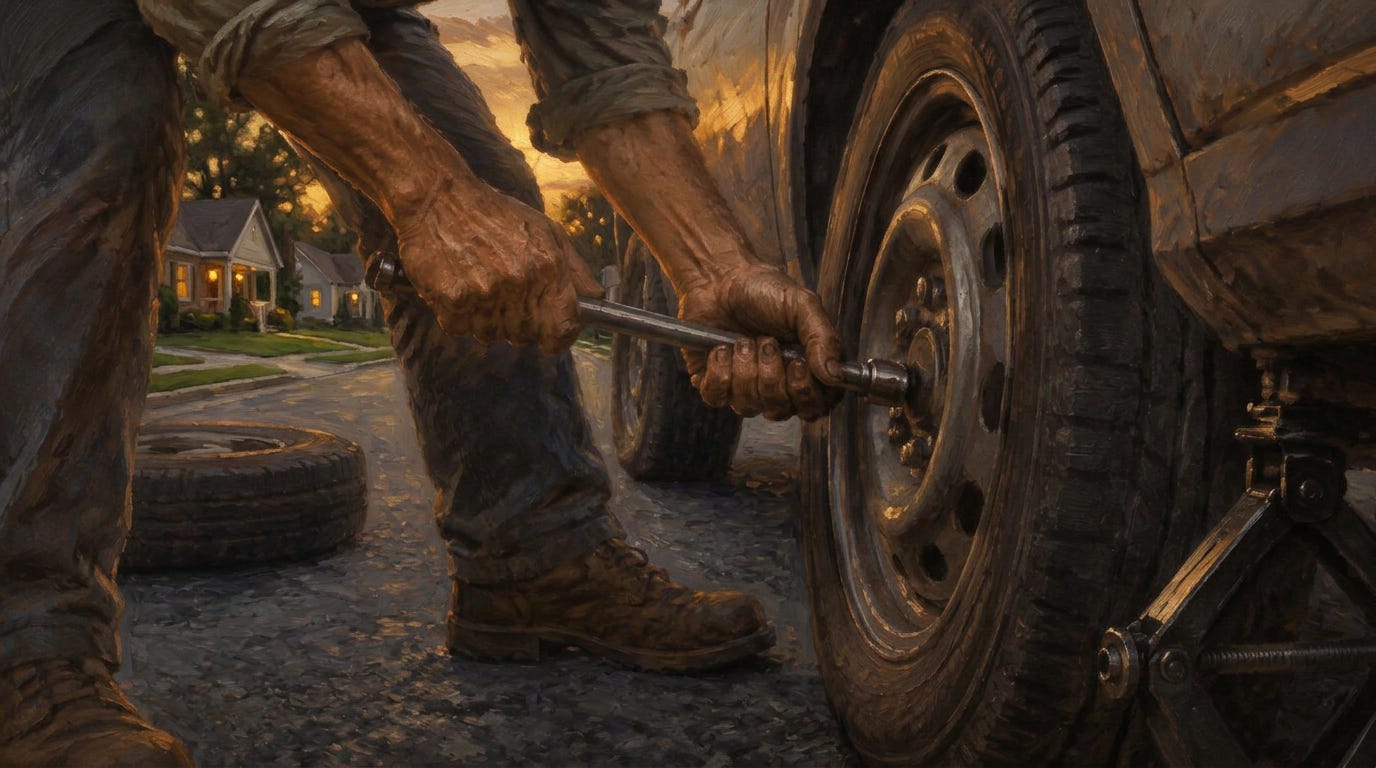
Two hours later, I got in my car, saw the low-tire-pressure light, and discovered a flat (not my day). I briefly considered limping to the local gas station — but that would mean leaving the car there for hours. Instead I called another local Jewish volunteer organization, Chaverim — “friends” — who exist to get people out of whatever jam they’ve landed in. They handle just about anything. Locked out of your house? A gopher on your lawn? No jumper cables? They’ll arrive in minutes and simply take care of it. The fellow who showed up looked like he was on his way to work and had just made a detour to help a stranger. No questions asked, nothing requested in return. Pure giving.
The Talmud sings the praises of this kind of bodily giving, ranking it above tzedakah:
The Sages taught: acts of kindness are superior to charity in three respects. Charity can be performed only with one’s money, while acts of kindness can be performed both with one’s body and with one’s money. Charity is given to the poor, while acts of kindness are performed for both the poor and the rich. Charity is given to the living, while acts of kindness are performed for both the living and the dead. (Sukkah 49b)
So the “elbow grease” acts of kindness rank higher — and perhaps that’s part of why they strike us so. They ask more. We’ve all felt the genuine desire to show up for someone — to help move a couch, to pay a shiva call, to make the long drive to a distant relative’s wedding. And we’ve all felt what happens as the moment approaches: the hundred other things vying for our attention start to weigh, and a small voice asks, “Why did I agree to this?” It takes real commitment to see it through.
The third and final chesed act I encountered last week took the form of a final repayment of a gemach loan. The word gemach stands for gemilut chasadim (acts of kindness). There are gemachs for everything; for wedding dresses, furniture, medical equipment, even charming backdrops for marriage proposals. The one I availed myself of was an interest free loan that helped me cover the expenses associated with back to back weddings a couple of years ago. There are actually two kinds of giving at work here; the loan itself and also the benefactors who funded the gemach in the first place (who will not get their money back). This brings us back to the incredible value of philanthropy.
While the Talmud ranks physical acts as the highest form of giving, the Chofetz Chaim — the revered early-20th-century sage and author of the Mishnah Berurah — argues that in some ways tzedakah is greater. He offers two reasons. First, tzedakah is permanent where a loan is not: a gift stays with the one who received it, while a loan is repaid and gone. Second, parting with money, expecting nothing in return, demands a conquest of our nature that lending a hand may not.
But however you slice it, this much remains. The people and institutions who do this work — in all its forms — have an immediate, direct, and deeply practical impact on real lives. Including mine. This is Torah in action: what it looks like when people take Jewish ideas seriously enough to live them. And for one tired guy with car troubles — and a scare at dawn — it made a world of difference.