

My audition for entry into the New England Conservatory was one of the most intense and scary moments of my life. I still remember being lead (I remember it in slow motion) down the hallway towards the room that held the key to my fate; to glory or doom. Turning right to go in I tried to smile as I beheld six incredible musicians; the three that I would play with and another three behind a desk, taking notes on how I was doing. Their thoughts and words; their judgement of my quality as a musician was everything to me.
Judgment is not something most people think they need more of. Most of us have no burning desire to ask others for their unvarnished opinions of our lives. But for the things we really care about, we should want it — we should even welcome it. Imagine you’ve poured months into a business plan and you’re about to sink your savings into it. If someone spots a fatal flaw before you write the check, you’d be thrilled — even though they just judged your plan and found it wanting—to your great benefit.
But there’s a deeper aspect of judgment. The tribunal at my audition showed me that what I was doing was serious. It mattered. I mattered.
There’s an old sitcom bit where a character is talked into running for some minor local office and, amusingly, starts having delusions of grandeur — envisioning win after win, all the way to the presidency. Then he discovers that dozens of people are elected to this position every year and no one is ever turned away. It wasn’t really an honor at all.
Deep down, no one wants that kind of life. No one wants the participation trophy. We want to dig deep and discover what we’re actually capable of. It’s certainly easier to have the professor who hands out A’s for showing up — but it’s a different world when you’ve studied your brains out and scored at the top of the class. A test is also a judgment: one that shows us both how we’re doing and even who we are.
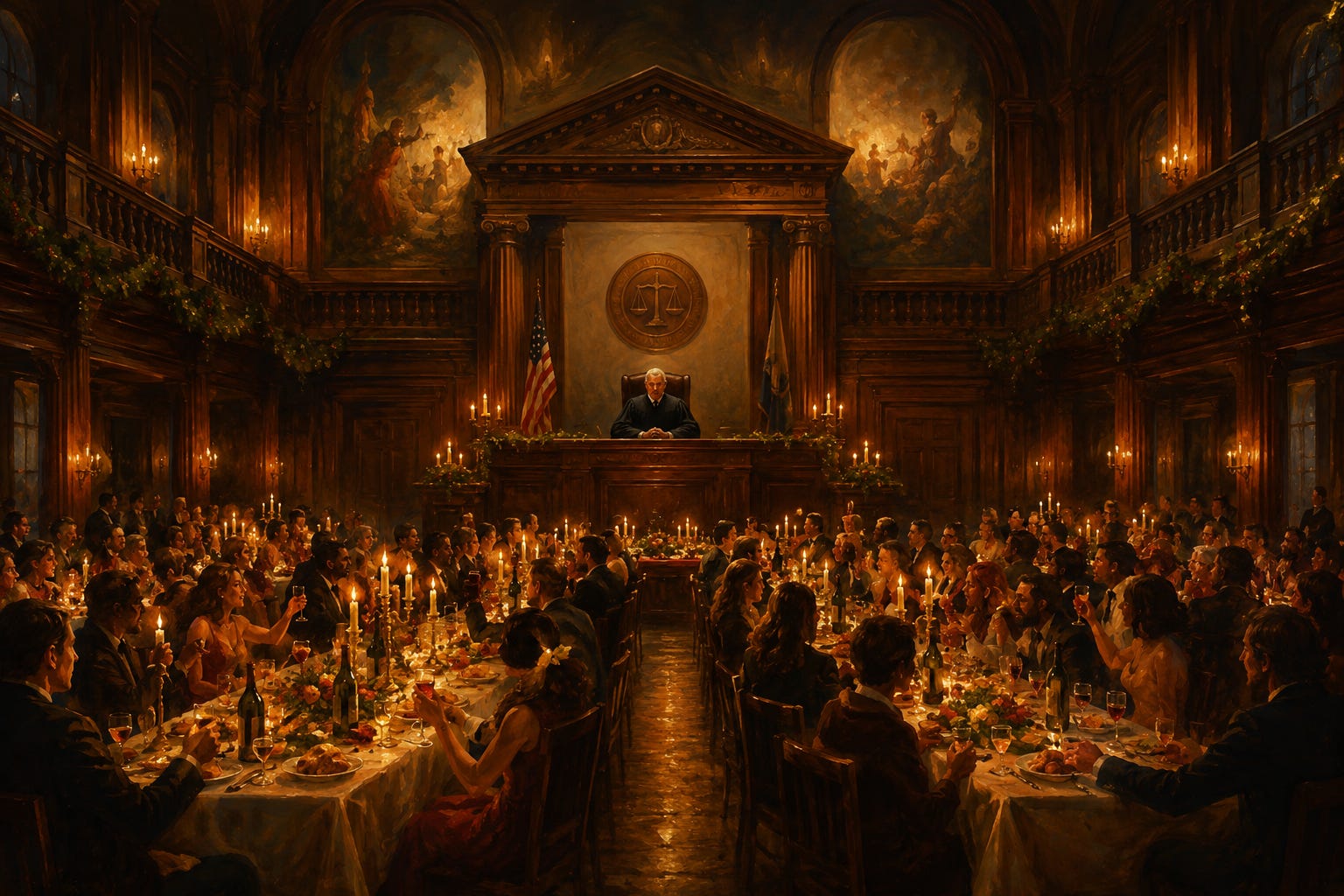
Rosh Hashana is called Yom HaDin — the Day of Judgment. As the day’s liturgy says: “As a shepherd musters his flock, making his sheep pass under his staff, so do You cause to pass, count, number, and review the souls of all the living…” Here it is the Judge of judges who will evaluate us — who looks directly into our souls to see what’s really there.
On the one hand, you’d think this would be a terrifying prospect. Who could be ready for that? And yet it’s a celebratory day — people dress in their finest, dip apples in honey, sit down to lavish meals. Despite its seriousness, we welcome the judgment; we revel in the prospect of real growth, confident that the Judge is firm but full of mercy. This is the essence of Rosh Hashana. It isn’t the Jewish New Year’s Eve. It’s a wild, festive, paradoxical celebration of Judgment Day.
It was a thrilling moment when I opened my mailbox and saw the thick packet from the New England Conservatory — the sign that I’d been accepted. My ordeal was over. I had been judged, and I had passed, and I was light-headed with joy. The difficulty of the test now felt sweet in retrospect. I was in — and ready for the next challenge.
Shanah Tova.
ALSO FROM THE LOOKING GLASS
The Well
Weekly chaburot in Kabbalah, Jewish philosophy, Mussar and Parsha. Five to ten people, one hour.
Apply for a seat →
Ohr Chozer
A private, judgment-free space for people working through doubt, or just beginning to ask.
Ask to join →